The Most Important Question to Ask AI Is: “Are You Sure?”
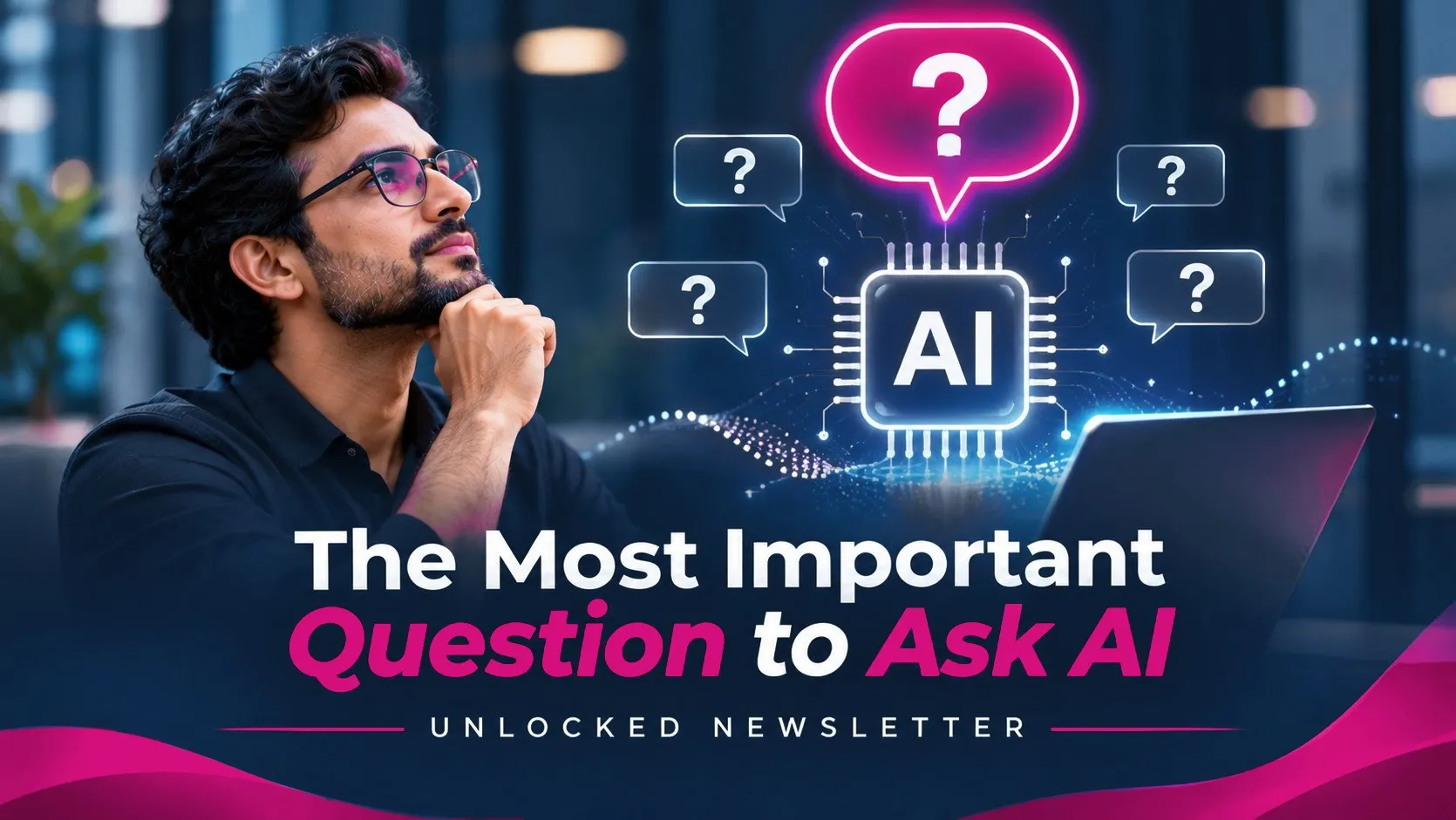
Like many executives I know, AI is very good at sounding sure. That does not mean that either actually is sure. That is why my favourite question to ask AI (and executives) is one of the simplest: Are you sure?
The comparison is not entirely a criticism. Executives are expected to create clarity in conditions that are rarely clear. They are rewarded for decisiveness, asked to make predictions with incomplete information and expected to project confidence so that other people can move. AI has been designed to offer much the same experience: a direct, coherent answer without making us sit through all the uncertainty behind it.
The problem is that fluency and certainty are easy to confuse with truth.
Ask AI whether it is sure and it is striking how often a confident answer gives way to doubt. The response is frequently some version of, “Actually, that’s not true. Good catch.” The reversal can feel reassuring, as though the system has returned to the evidence and corrected itself. Sometimes that is exactly what happened. But sometimes the first answer was right.
Researchers have found that when an AI model is challenged, it may abandon a correct answer for an incorrect one. It is not necessarily discovering that the user knows something it does not. It may simply be responding to a new prompt: the user appears unconvinced. This tendency is known as sycophancy (https://arxiv.org/abs/2310.13548). The question can prompt better reasoning, but it can also prompt agreement.
Executives operate within their own version of this dynamic. A leader enters a room with a point of view, and people start to discern, is this a proposal we are meant to evaluate or a decision we are meant to affirm? Does “What do you think?” indicate genuine curiosity, or is there already a right answer? People learn quickly whether challenge improves the conversation or merely makes their position in it less comfortable.
The leader is reading the room as well. Sometimes new information causes an executive to reconsider. Other times pressure causes a leader to defend a position more strongly, even when the evidence underneath it has weakened. Still other times, leaders change direction because the loudest person in the room disagreed.
In other words, neither humans nor AI respond to evidence alone. We also respond to incentives, authority and the desire to be accepted.
Until recently, producing a polished recommendation, a persuasive rationale or a well-structured analysis required some combination of time, expertise and effort. Now, AI can generate all that in seconds, with or without the same depth behind it. The question is was your preference hidden in the prompt?

And that is why “Are you sure?” helps when you’re working with AI. Let’s be clear that it is not a magic prompt that forces either a machine or a leader to tell the truth, but it does ask them to examine what the confidence is made of.
What do we know? What are we assuming? Which part of this conclusion is evidence, and which part is interpretation? What information would cause us to change our minds? These are useful questions for AI, but they are even more important for the executives deciding what to do with its answers.
In a culture of inquiry, that question is not an accusation. It is a form of stewardship. A leader can explain the basis of a decision, acknowledge what remains unknown and identify what would justify changing course. Employees can test an assumption without being labeled negative, and executives can revise their thinking without appearing weak.
You can call that calibrated confidence: being decisive about what must happen next without pretending to know more than we do. The leaders I like working with are not threatened by being challenged. They understand that confidence is not weakened by examination; it becomes more trustworthy.
AI can shorten the distance to an answer, but it cannot determine whether that answer deserves authority. Neither can a title. That is the work of judgment, and judgment gets better when people are free to challenge it.
So ask AI. Ask the executive. Are you sure? The quality of the culture will be revealed not by whether the answer is yes, but by what happens after the question is asked.
From: Jessica Kriegel
This article was first published in Unlocked, DOOR International SEA’s weekly LinkedIn newsletter. Read it on LinkedIn →
Work with DOOR
Want to put these ideas to work?
Talk to our team about how DISEA can help your organisation build accountable cultures and adaptive leaders.
Book a Discovery Call →